The Jonathan Swift Library
Welcome, curious listener, to The Jonathan Swift Library, a most serious repository of voyages, follies, and uncomfortable truths. Within this auditory cabinet you shall find entire books read aloud, as if rescued from the dust of some neglected Enlightenment shelf. Expect giants and tiny emperors, philosophers both wise and ridiculous, and the occasional reminder that mankind, for all its claims to reason, remains delightfully absurd. Pray sit upright, adjust your headphones with dignity, and prepare to be entertained, corrected, and perhaps gently mocked.
Episodes

The Battle of the Books - Introduction, the bookseller to the reader, & the preface of the author
In which the life and education of Jonathan Swift are laid forth with gentle detail, tracing his early struggles, friendships, and formative influences that shaped the author’s wit and resolve. Also revealed is the spirited literary quarrel between the ancients and moderns, wherein Swift’s playful yet pointed contribution sets the scene for a lively contest of intellect and taste.
The Battle of the Books - A full and true account... Part 1
In which the ever-contentious strife between the venerable Ancients and the ambitious Moderns is described as a learned war of portentous quarrels over intellectual supremacy, conducted with pens as their weapons and writ in books of controversy chained in libraries. Amidst this fierce contention, a curious and spirited debate unfolds between a prideful spider and a diligent bee, exemplifying the
The Battle of the Books - A full and true account... Part 2
In which the bees and spiders represent the Ancients and Moderns, respectively, each deploying their crafts and arts in a learned dispute that culminates in preparations for a grand and momentous battle between these rival factions of books. This clash, witnessed by gods and influenced by allegorical deities such as Criticism and Dulness, unfolds with heroic leaders and martial encounters that ech
The Battle of the Books - The Episode of Bentley and Wotton
In which the valiant but ill-favoured Bentley and his dear companion Wotton, driven by discontent and ambition, set forth stealthily amid the chaos of battle in hopes of seizing advantage from the slumbering foe. Their ventures lead them to encounters both fortuitous and fatal, where fate and divine intervention interlace, culminating in a tragic yet heroic close to their endeavours.
The Battle of the Books - A Meditation Upon a Broomstick
In which a humble broomstick is observed in its decline from a flourishing tree to a worn tool of drudgery, serving as a poignant metaphor for the human condition and its inevitable fall from natural grace to affected artifice. Through this comparison, a gentle satire unfolds, revealing man's vanity and folly as he attempts to mask his decay and assumes the role of a reformer while sharing in the
The Battle of the Books - Predictions for the Year 1708
In which a diligent observer, perturbed by the vulgar falsehoods of common astrologers, sets forth a series of precise and sober predictions for the coming year, aspiring to reclaim the ancient art of astrology from illiterate impostors and reckless almanack-makers. With a measured tone and careful calculation, he chronicles expected events both at home and abroad, tendering his reputation as a ge
The Battle of the Books - The Accomplishment of the First of Mr. Bickerstaff’s Predictions…
In which a detailed account is given of the curious and melancholy death of Mr. Partridge, the almanack-maker, whose demise was foretold by the predictions of a certain Mr. Bickerstaff, provoking reflections on the power of imagination and superstition. The narrative conveys an air of sober inquiry mingled with a gentle scepticism towards astrology and the impressions it leaves on the credulous mi
The Battle of the Books - Baucis and Philemon
In which two saintly brothers disguised as beggars seek lodging in a cold and unwelcoming village, finding kindness only from the humble couple Baucis and Philemon, whose simple cottage miraculously transforms into a splendid church. The saints reward the couple’s hospitality by elevating their station and dwelling, resulting in a quaint yet miraculous tale of transformation and enduring devotion.
The Battle of the Books - The logicians refuted
In which the esteemed Logicians, with much learned discourse, dispute the nature of reason and its possession by mankind, whilst the author humbly suggests that instinct may surpass the vaunted faculty of human rationality. Observing the follies of men and their courtly mimicries, he portrays the animal kingdom as free from such base affectations, save for the ape whose malice and mimicry are but
The Battle of the Books - The puppet show
In which the art of the puppet-show is employed as a cunning metaphor to reflect the follies and foibles of mankind, portraying life as a pageant of wooden figures manipulated by invisible strings. Through a satirical lens, the poem reveals how men, from princes to peasants, are but actors in a farcical display, their pretensions and passions no more than the movements of lifeless puppets.
The Battle of the Books - Candenus and Vanessa
In which the mighty goddess Venus strives to restore the waning power of love by crafting a paragon of virtue and wit named Vanessa, only to find her design confounded by the mingled influences of wisdom and human folly. Amidst courtly pleasantries, learned debates, and the subtle darts of Cupid, Vanessa’s uncommon mind both challenges and puzzles those around her, revealing the enduring complexit
The Battle of the Books - Stella’s Birthday, 1718
In which a genteel and affectionate verse marks the celebration of Stella’s thirty-fourth year, tenderly reflecting on the constancy of her beauty and wit since youth. The poet wistfully muses on the enchanting qualities of his beloved, wishing to divide his admiration so as to honour two gracious nymphs alike.
The Battle of the Books - Stella’s Birthday, 1720.
In which a charming ode is offered to Stella’s enduring allure, lauding her wit, sense, and hospitality that outshine mere youthful beauty or superficial appearance. The poem gently mocks rival establishments and idle gossip, suggesting that true charm and substance will always draw the discerning visitor.
The Battle of the Books - Stella’s Birthday
In which a devoted poet struggles mightily to compose an annual ode in honour of Stella’s birthday, wrestling with his diminished inspiration and the fear of public reproach. He seeks Apollo’s divine counsel, who prescribes a ritual involving a long-hidden bottle of wine and the assistance of faithful friends to rekindle the muse’s favour and prompt the verses Stella deserves.
The Battle of the Books - Stella’s Birthday, 1724
In which the speaker, reflecting with gentle melancholy on the passage of time, contemplates the fading of youthful beauty and poetic inspiration as he celebrates a beloved lady’s birthday with heartfelt prose rather than rhyme. Despite acknowledging nature’s inevitable changes, he affirms the enduring virtues of honour, wit, and friendship, which remain untouched by age or outward appearance.
The Battle of the Books - Stella’s Birthday, March 13, 1726
In which a reflective and tender birthday meditation gently unfolds, extolling the enduring comfort found in a life well lived and the virtue that nourishes the mind beyond bodily decline. The verses contemplate the stoic courage of a beloved friend, inviting solace in past deeds of kindness and the hope of a tranquil future state.
The Battle of the Books - To Stella
In which a devoted friend extols the virtues of Stella, a lady whose wit, honour, and courage transcend the common prejudices of her sex, illustrating true nobility of mind with a gentle yet firm voice. We are also tenderly given a glimpse into the intimate care and profound affection shared during a time of illness, underscoring the sincerity of friendship beyond mere words.
The Battle of the Books - The first he wrote OCT. 17, 1727
In which a deeply devout prayer is offered for the restoration and comfort of a cherished individual enduring a long and fragile illness, beseeching divine mercy, patience, and strength for both the sufferer and those who hold her dear. The plea reflects a gentle resignation to the mysteries of Providence, extolling virtues and seeking solace in the hope of eternal peace beyond worldly affliction.
The Battle of the Books - The second prayer was written NOV. 6, 1727.
In which a humble and devout supplication is offered, beseeching divine mercy and strength for a suffering soul enduring prolonged affliction. The prayer gently beseeches patience, forgiveness, and the grace to find solace in faith amid the trials of mortality, whilst also seeking comfort for those who mourn.
The Battle of the Books - The Beasts' confession (1732)
In which various beasts, taking on human-like faculties of speech and conscience, offer earnest confessions before their sovereign, each revealing peculiar virtues and follies in a manner that mirrors the complexities of human character. Through this allegorical assembly, a gentle critique unfolds of the vanity, pretence, and self-justifications commonly found within mankind’s own social and moral
The Battle of the Books - An argument to prove that the abolishing...
In which a cautious and dissenting voice reflects on the widespread proposal to abolish Christianity in England, considering its purported benefits and possible inconveniences with a measured and satirical eye. The discourse examines how religion, though often ridiculed and deemed antiquated, serves as a social instrument shaping liberty, order, and even the pursuits of wit, warning of unforeseen
The Battle of the Books - Hints towards and essay on conversation
In which the art of conversation is examined with keen observation and gentle critique, exposing the common faults and follies that mar this most social of pleasures, and advocating for a genteel and sincere discourse as a means to civil delight. The narrative wittily unfolds the various humours and habits of men who engage in talk, revealing how virtues and vices alike shape the manners of compan
The Battle of the Books - Thoughts on various subjects
In which the narrator meditates upon the inconsistencies and follies of mankind, reflecting with delicate irony on human nature, society, and the pursuits that engross men’s fleeting attention. This collection of observations ranges from the vanity of men and the imperfections of providence to the peculiarities of learning, ambition, and the delightful contradictions of life itself.
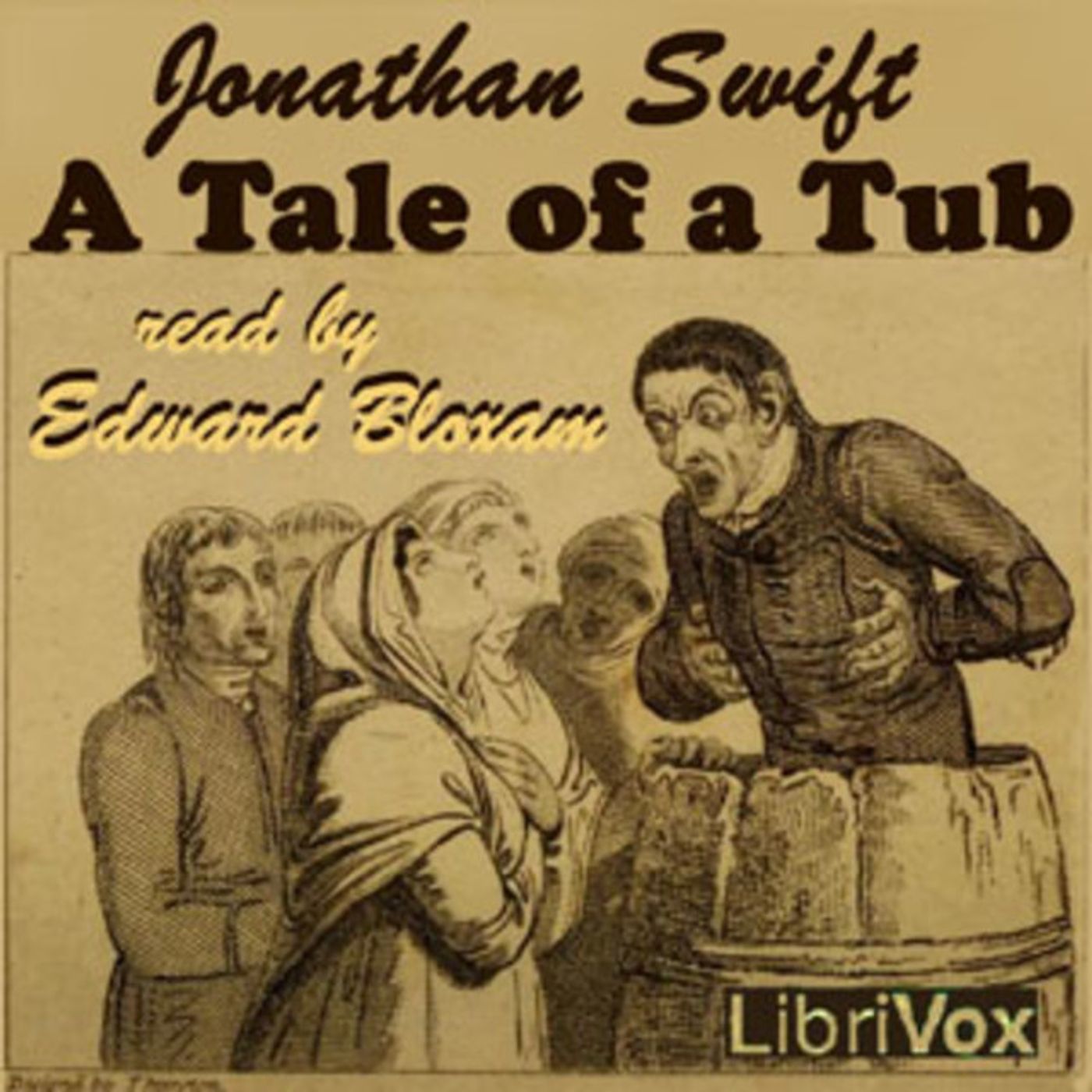
A Tale of a Tub Introduction and Preface
In which a bookseller assumes the noble office of dedicating a certain treatise to a distinguished lord, comically meditating on the nature of praise and the commonplaces of dedications, while also lamenting the precarious fate of contemporary authors and the swift oblivion their works often suffer. The preface further expounds upon the proliferating wit of the age, the subtle art of satire, and t
A Tale of a Tub Section 1
In which the labourious art of raising one’s voice above the multitude is dissected through the allegory of three oratorical machines—the pulpit, the ladder, and the itinerant stage—each symbolising distinct modes and merits of public discourse. This prelude further ventures into the delicate rivalry among literary societies, the veiled wisdom of fables, and the author's ambitious programme to unv
A Tale of a Tub Section 2
In which three young brothers inherit plain yet extraordinary coats from their late father, destined to grow with them and to be worn strictly according to his precise will, as they embark on their adventures amidst the capricious fashions and fancies of society. In an age where attire is both law and language, these gentlemen grapple with ever-changing modes and casuistries to maintain their fath
A Tale of a Tub Section 3
In which the noble art of criticism is explored with delicate irony, tracing its ancient and heroic origins through allegory and myth, while casting a shrewd eye on the critic’s perpetual quest to uncover faults amidst the literary harvest. With a tone both reverent and satirical, the discourse sets forth the critic’s nature, office, and enduring character, preparing the way for the tale’s further
A Tale of a Tub Section 4
In which we observe the great metamorphosis of Lord Peter, who, upon securing his own estate, embarks on a series of whimsical and extravagant ventures, inventing odd contrivances and establishing curious institutions that win both notoriety and wealth. Yet, as pride inflates him to madness and knavery, his extravagant pretensions and tyrannical demeanour alienate his brothers, culminating in a gr
A Tale of a Tub Section 5
In which a learned modern author embarks on a witty and intricate dissection of the human condition, professing to combine instruction and amusement for the public good, whilst playfully critiquing the errors and omissions of past sages with a lively mixture of satirical erudition. He unveils a curious, alchemical recipe for distilling all knowledge into a potent essence and reflects, with gentle
A Tale of a Tub Section 6
In which the two brothers, cast out into the world and forsaken by fortune, resolve to restore their lives and garments according to the precise dictates of their father’s will, each adopting a very different temper and method in this great reformation. Their disparate enterprises and passions soon lead to a rupture between them, setting the stage for singular adventures amid the fashion of coats
A Tale of a Tub Section 7
In which the author indulges in a learned discourse on the merits and fashions of digressions, likening them to the artful concoctions of a refined cuisine and the bustling multiplicity of modern learning. He surveys the landscape of contemporary scholarship with a wry eye, noting how the accumulation and indexing of knowledge serve both as a convenience and a symptom of an era pressed for origina
A Tale of a Tub Section 8
In which the curious doctrine of the Æolists is expounded with a delicate humour, portraying men as vessels of wind whose learning and inspiration proceed through the noble art of belching, revering the four cardinal winds as gods and indulging in mysterious rites of spiritual inflation. With keen observation and a gentle irony, the narrative reveals how these airy philosophies naturally contrive
A Tale of a Tub Section 9
In which the curious nature and varied consequences of madness are examined as a potent and indispensable force behind great political upheavals, philosophical innovations, and religious fervours, likened to vapours rising through the faculties of the brain in diverse and unpredictable ways. It is proposed that, rather than being a mere malady, madness might be fruitfully harnessed by judicious em
A Tale of a Tub Section 10
In which a courteous author offers his humble thanks to his patrons and reflects on the curious circumstances that often give rise to literary works, with a mild jest at those who hasten to produce unwarranted sequels. He also contemplates the diverse receptions of his discourse among readers of varying knowledge, and humbly invites future scholars to labour patiently upon the deeper mysteries con
A Tale of a Tub Section 11
In which the singular exploits and absurd humours of the inimitable Jack are displayed with a keen eye for the curious and the comical, as he navigates a world of fancy and folly armed with a mystical will and peculiar habits that confound his acquaintances. These adventures are set against a backdrop of philosophical reflection and quaint imagery, delighting in the follies of man’s senses and the
A Tale of a Tub Section 12
In which the author reflects with wry humour on the timing and reception of literary works, comparing books to seasons and acknowledging the peculiar tastes of readers and booksellers alike. He muses on the art of concluding a treatise, the folly of excessive profundity, and the challenge of sharing wit and invention in conversation, all while inviting the reader’s indulgence for moments of dulnes
Gulliver's Travels The publisher to the reader
In which a modest preface is presented by a trusted acquaintance of Mr. Lemuel Gulliver, who assures the reader of the veracity and plainness of the forthcoming narrative, albeit with some passages prudently omitted to suit the common understanding. This gentle introduction serves to establish both the character of the author and the nature of his travels, inviting the reader to partake in the cur
Gulliver's Travels A letter from Captain Gulliver to his cousin Sympson
In which a candid letter from Captain Gulliver reveals his vexation at the unauthorised alterations and misrepresentations of his travel accounts, reflecting his deep dissatisfaction with the folly and corruption of human nature as observed amongst the Yahoos. He laments his failed hopes for reform and prepares to recount his voyages, inviting readers to judge his narrative with due candour and di
Gulliver's Travels Part 1 Chapter 1
In which a learned English surgeon recounts his early life and voyages at sea before a dreadful shipwreck casts him ashore the strange land of Lilliput, where he finds himself bound and beset by a multitude of minute but intrepid inhabitants. Though initially objectified and restrained, he is courteously tended to by these diminutive people, who employ ingenious devices and great numbers to convey
Gulliver's Travels Part 1 Chapter 2
In which the great emperor of Lilliput, attended by his court and nobility, comes forth to behold and cautiously engage with the prodigious stranger confined by a slender chain, despite the inability of either party to comprehend the other's tongue. The stranger is subjected to a meticulous search of his vast pockets, surrendering weapons and trinkets of curious make, whilst gradually gaining favo
Gulliver's Travels Part 1 Chapter 3
In which the author wins the favour of the diminutive emperor and court through gentle amusement, notably by conducting elaborate displays with their horses and observing the curious contests of agility used to determine office. Having earned their trust, he is granted liberty upon solemn conditions that reflect the peculiar customs and precise economy of this diminutive realm.
Gulliver's Travels Part 1 Chapter 4
In which the author, newly liberated, is permitted a cautious exploration of Mildendo, the diminutive yet populous capital, whose architecture and imperial palace are described with attentive detail. He is then made acquainted by a principal secretary with the internal political divisions and ongoing martial threats of this curious empire, to which he offers his humble services in their defence.
Gulliver's Travels Part 1 Chapter 5
In which the author, by a feat of remarkable courage and ingenuity, captures the enemy fleet of Blefuscu and gains a high honour from the emperor of Lilliput, yet soon incurs the disfavour of the court through his refusal to serve oppressive designs. Moreover, he quells a dangerous fire in the imperial palace by an unconventional means, thereby saving the royal residence but stirring fresh enmity
Gulliver's Travels Part 1 Chapter 6
In which the curious proportions, peculiar customs, and rigorous education of the diminutive Lilliputians are described with a careful eye, revealing their laws, moral priorities, and the author’s unique mode of living among them. A delicate defence is also made of a lady unjustly maligned by court scandal, illustrating the intricate tensions within the imperial household.
Gulliver's Travels Part 1 Chapter 7
In which the narrator, apprised of a conspiracy to accuse him of high treason, deliberates on his perilous predicament within a court rife with intrigues and capricious cruelty. With a mixture of rash courage and youthful ignorance, he flees to the neighbouring empire of Blefuscu, where he receives a courteous yet uncertain welcome from its sovereign.
Gulliver's Travels Part 1 Chapter 8
In which the narrator industriously prepares and repairs a found vessel with imperial assistance to secure his departure from Blefuscu, navigating the delicate politics between rival monarchs with prudence and modest dignity. After a voyage marked by providence and careful provisioning, he rejoices in his return to his native land, briefly reunited with family and fortune before setting sail once
Gulliver's Travels Part 2 Chapter 1
In which a daring mariner, caught in a most tempestuous storm, finds himself cast upon a wondrous and enormous land inhabited by colossal beings, whose size and customs are marvelled at with a blend of awe and gentle apprehension. Amidst the curious rites and imposing domesticities of this strange people, the traveller endeavours to maintain his dignity and reason, whilst reflecting thoughtfully o
Gulliver's Travels Part 2 Chapter 2
In which our diminutive narrator finds tender and attentive care from a gentle maiden who becomes both nurse and instructress, while he is displayed as a rare curiosity to the local folk, much to his own mixed feelings. His master, seeing profit in this marvel, embarks upon a lengthy journey to present him in town and city alike, during which the narrator continues to acquire language and understa
Gulliver's Travels Part 2 Chapter 3
In which the diminutive traveller is purchased for the Queen's amusement and gradually acclimatises to life at court, where he engages in learned discourse and is provided with a miniature abode befitting his stature. Amidst the admiration of royalty and the vexations posed by the queen’s dwarf and formidable insects, he reflects on the curious contrasts between his homeland and this new realm.
Gulliver's Travels Part 2 Chapter 4
In which the narrator provides a diligent and measured account of the vast kingdom of Brobdingnag, its extraordinary geography, populous cities, and the immense scale of its architecture and inhabitants, all observed with a meticulous eye and a touch of wonder. He also describes his manner of travel and the curiosities encountered, from monstrous sea creatures to the imposing yet familiar edifices
Gulliver's Travels Part 2 Chapter 5
In which the diminutive narrator recounts various humorous and perilous incidents that befall him in the court gardens, including encounters with wayward animals and the curious attentions of the maids of honour. He also demonstrates his nautical talents by instructing the construction of a miniature boat for his exercise, enduring mishaps that amuse and alarm the royal household.
Gulliver's Travels Part 2 Chapter 6
In which the narrator endeavours to ingratiate himself with the royal family by presenting various ingenious creations and performing music on a gigantic spinet, earning audiences with the discerning king. During these meetings, he delivers an elaborate and candid exposition of the English government, laws, and customs, provoking the king’s thoughtful and, at times, satirical reflections upon the
Gulliver's Travels Part 2 Chapter 7
In which the narrator endeavours to convey his affection for his native land whilst recounting a most singular and narrow-minded royal refusal of a powerful invention that could govern by force, revealing a prince whose wisdom and virtues are somewhat clouded by his ignorance of politics and human nature. The manners, laws, military practice, and learning of this secluded realm are displayed with
Gulliver's Travels Part 2 Chapter 8
In which the narrator, long captive in a land of giants, secures a strange and perilous escape by means of a wooden box borne off by a great eagle, only to be discovered at sea by kindly English sailors who bring him home again. Upon his return, he finds himself comically altered by his experiences among monstrous beings, and contemplates the curious transformations wrought upon a man by habit and
Gulliver's Travels Part 3 Chapter 1
In which the adventurous surgeon embarks upon a voyage that swiftly turns perilous, as he falls into the hands of pirates and finds himself cast adrift upon a rocky isle. There, amidst his solitude and despair, he witnesses with astonishment a grand flying island, whose curious inhabitants shortly extend to him a token of their strange and lofty civilisation.
Gulliver's Travels Part 3 Chapter 2
In which the narrator encounters the peculiar people of Laputa, whose heads lean aside and whose attention is so absorbed by mathematical and musical abstractions that they require attendants to rouse them to conversation and action. Amidst their whimsical customs, phobias of celestial catastrophes, and odd manners—especially concerning the liveliness of the women—the author slowly learns their la
Gulliver's Travels Part 3 Chapter 3
In which a curious philosopher is granted leave to explore the manner and mechanism by which a vast floating island is suspended and navigated above a kingdom, employing a prodigious loadstone whose magnetic powers govern the motions of the adamantine base. The sovereign’s dominion is enforced by threatenings of deprivation and destruction upon rebellious cities below, yet political intrigue and n
Gulliver's Travels Part 3 Chapter 4
In which the narrative unfurls the author's departure from an island of lofty musings to a more grounded but equally perplexing land, where he encounters a lord whose own prudent ways set him apart from the prevailing tide of impractical innovation. This lord guides the author through a realm afflicted by the ambition of projectors whose grand designs have left the country in ruin and its people i
Gulliver's Travels Part 3 Chapter 5
In which the curious traveller is admitted to the grand academy of Lagado, a place where inventors and scholars pursue many whimsical and absurd projects, from extracting sunshine from cucumbers to teaching the blind to distinguish colours. Amidst these endeavours, he witnesses a peculiar contrivance designed to compose books by mechanical means and discourses with various professors proposing str
Gulliver's Travels Part 3 Chapter 6
In which the author visits a peculiar academy devoted to political projectors, encountering an ingenious physician who applies medical analogies to cure the maladies afflicting senates and ministers, along with various whimsical proposals to improve governance and public administration. He further observes the intricate methods of detecting conspiracies, enriched by an account from a foreign land
Gulliver's Travels Part 3 Chapter 7
In which the narrator departs from Lagado and, finding no ship ready at Maldonada, accepts an invitation to visit the curious island of Glubbdubdrib, governed by a magician prince with the extraordinary power of summoning spirits from the dead. During his stay, he becomes acquainted with these apparitions and is granted the remarkable privilege of calling forth illustrious historical figures to co
Gulliver's Travels Part 3 Chapter 8
In which the traveller, granted the extraordinary privilege to summon and converse with the illustrious dead, observes with a discerning eye the virtues and follies of ancient philosophers and the often ignoble realities behind modern nobility and history. He finds cause for sober reflection upon the corruption, vice, and degeneration that have sullied the human character and distorted the truth o
Gulliver's Travels Part 3 Chapter 9
In which the narrator journeys to the kingdom of Luggnagg and finds himself courteously confined while awaiting royal instructions, during which he encounters the peculiar customs and gracious lenity of the Luggnaggian court. He is admitted with ceremonious humility before the king, indulged with hospitality and honour, yet mindful of his desire to return to his own family.
Gulliver's Travels Part 3 Chapter 10
In which the narrator encounters the Luggnaggians, a courteous and proud people, and learns of the rare struldbrugs—mortals born with the dreadful gift of immortality marked by a changing spot on their foreheads. After hearing his eloquent praises of endless life, he is gently corrected and informed of the melancholy, decay, and societal exile that burden these immortals, leading him to a profound
Gulliver's Travels Part 3 Chapter 11
In which the author departs from the curious realm of Luggnagg and embarks on a brief sojourn to Japan, where he navigates the delicate duties of diplomacy with some forthright petitions and discreet guile. He then embarks upon a steady and uneventful voyage back to his native England, well provided and restored to his family after a long and extraordinary absence.
Gulliver's Travels Part 3 Chapter 1
In which a seafaring captain is betrayed by his mutinous crew and left to wander a strange land, where he encounters wild and repulsive creatures known as Yahoos and the remarkably intelligent and courteous Houyhnhnms. Through careful observation and tentative communication, he begins to perceive the noble faculties of these equine beings, whose demeanour soothes his troubled spirit amidst an alie
Gulliver's Travels Part 4 Chapter 2
In which the traveller is kindly received into the abode of the Houyhnhnms, a most singular and sagacious breed of equine beings, where he is perplexed and distressed by the evident resemblance yet repugnance of the detestable Yahoos—creatures bearing a dismal likeness to mankind. He is taught their language, partakes of their simple fare, and endeavours to adapt to their modes of sustenance and l
Gulliver's Travels Part 4 Chapter 3
In which the narrator, under the tutelage of a most patient Houyhnhnm, endeavours to acquire the curious language of these noble creatures, much to the astonishment of his equine instructors and their neighbours, whilst concealing the human artifice of his clothing to distinguish himself from the brutish Yahoos. With growing fluency and candour, he relates to his master the strange tale of his oce
Gulliver's Travels Part 4 Chapter 4
In which the narrator endeavours to explain the strange customs and knavery of mankind to his Houyhnhnm master, who listens with a mixture of astonishment and moral indignation, particularly at the practices of deceit and the harsh treatment of horses in the narrator’s homeland. The discourse turns to the narrator’s own origin and the misfortunes of his companions, whose desperate circumstances re
Gulliver's Travels Part 4 Chapter 5
In which a diligent servant imparts to his discerning master a curious account of England’s political tumults, wars provoked by trivial disputes, and the intricate, often unjust practices of its legal system. The discourse reveals a world where reason is frequently subverted to vice in both the art of war and the administration of law, lamented by one who observes with both horror and wonder the f
Gulliver's Travels Part 4 Chapter 6
In which a humble narrator endeavours to enlighten a discerning Houyhnhnm on the perplexing vices, maladies, and social artifices that mar human life, including the curious pursuits of physicians and the intricate commerce of wealth and power. The discourse extends to a most unflattering portrait of political ministers and the follies of nobility, as observed through a lens both candid and satiric
Gulliver's Travels Part 4 Chapter 7
In which the narrator candidly reflects upon the striking contrasts between the noble Houyhnhnms and the wretched Yahoos, revealing a profound disillusionment with human nature and its follies. His master, with a discerning eye, elaborates on the base instincts and social disorders of mankind’s semblance in the Yahoos, offering a curious and often biting commentary on the vices and vanities that g
Gulliver's Travels Part 4 Chapter 8
In which the narrator embarks on cautious observations of the savage Yahoos, unravelling their brutish nature and vile habits under the watchful eye of his steadfast equine protector, whilst contrasting them with the virtuous Houyhnhnms, whose society is governed by reason, benevolence, and an admirable discipline of youth. The customs, assemblies, and domestic affairs of these rational creatures
Gulliver's Travels Part 4 Chapter 9
In which a solemn assembly of the Houyhnhnms debates the fate of the troublesome Yahoos, considering strategies both severe and subtle, whilst reflecting on the peculiarities of their society, language, and customs. The narrative gently unfolds their rational ways of living, from their unadorned dwellings to their serene acceptance of death, revealing a people governed by reason and virtue, untouc
Gulliver's Travels Part 4 Chapter 10
In which the author finds contentment and virtue in the company of the rational and amiable Houyhnhnms, learning much from their conversations and way of life, whilst reflecting on the faults of his own species with a mixture of horror and admiration. Yet, despite his happiness and improvement, he is compelled by an assembly’s decree to leave their country, prompting him to craft a canoe with dili
Gulliver's Travels Part 4 Chapter 11
In which the author undertakes a perilous voyage to a remote land, where he suffers injury at the hands of natives and is subsequently rescued by a kindly Portuguese captain, whose civilities he reluctantly accepts. Upon his return to England, he finds himself alienated from his former life and kin, harbouring a profound preference for the noble company of horses over that of his own species.
Gulliver's Travels Part 4 Chapter 12
In which the author solemnly vindicates the truthfulness of his long and unusual travels, lamenting the rash falsities often told by less scrupulous voyagers, and extols the virtues of the rational Houyhnhnms while reflecting on the shortcomings of his own countrymen. He takes his final leave with a modest proposal for personal reformation and a gentle admonition to those afflicted by pride, thus
A Modest Proposal
In which a cool-headed projector, surveying the swarms of impoverished mothers and children that burden a suffering kingdom, proposes with shocking arithmetic that infants be turned into a profitable commodity, thereby easing poverty, enriching landlords, and delighting the tables of the wealthy. With feigned reasonableness and savage irony, he praises the supposed economic, social, and moral bene