AWS Bites
AWS Bites is a podcast about Amazon Web Services. Certified AWS experts Eoin Shanaghy and Luciano Mammino answer common questions and discuss practical cloud topics. Episodes cover AWS services, architecture patterns, and best practices for developers and engineers. The show is aimed at people building or learning on AWS.
Episodes
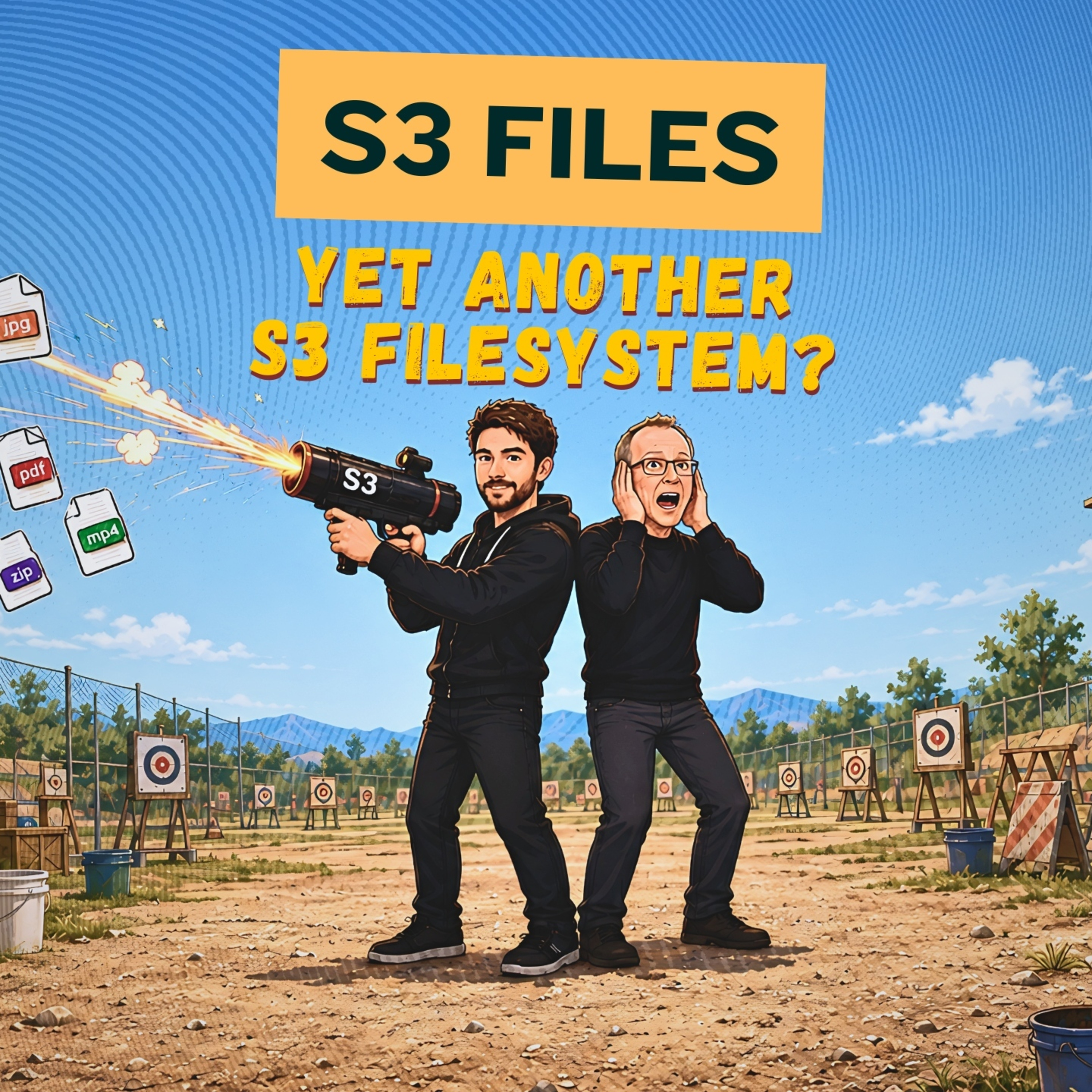
154. S3 Files
We take a deep dive into Amazon S3 Files, AWS's exciting new managed file system backed by S3! We kick things off by exploring why S3 isn't a traditional file system, covering everything from the lack of true directories and atomic renames to immutable objects and POSIX access control differences. We then walk through the existing solutions people have used to bridge that gap, like S3FS F
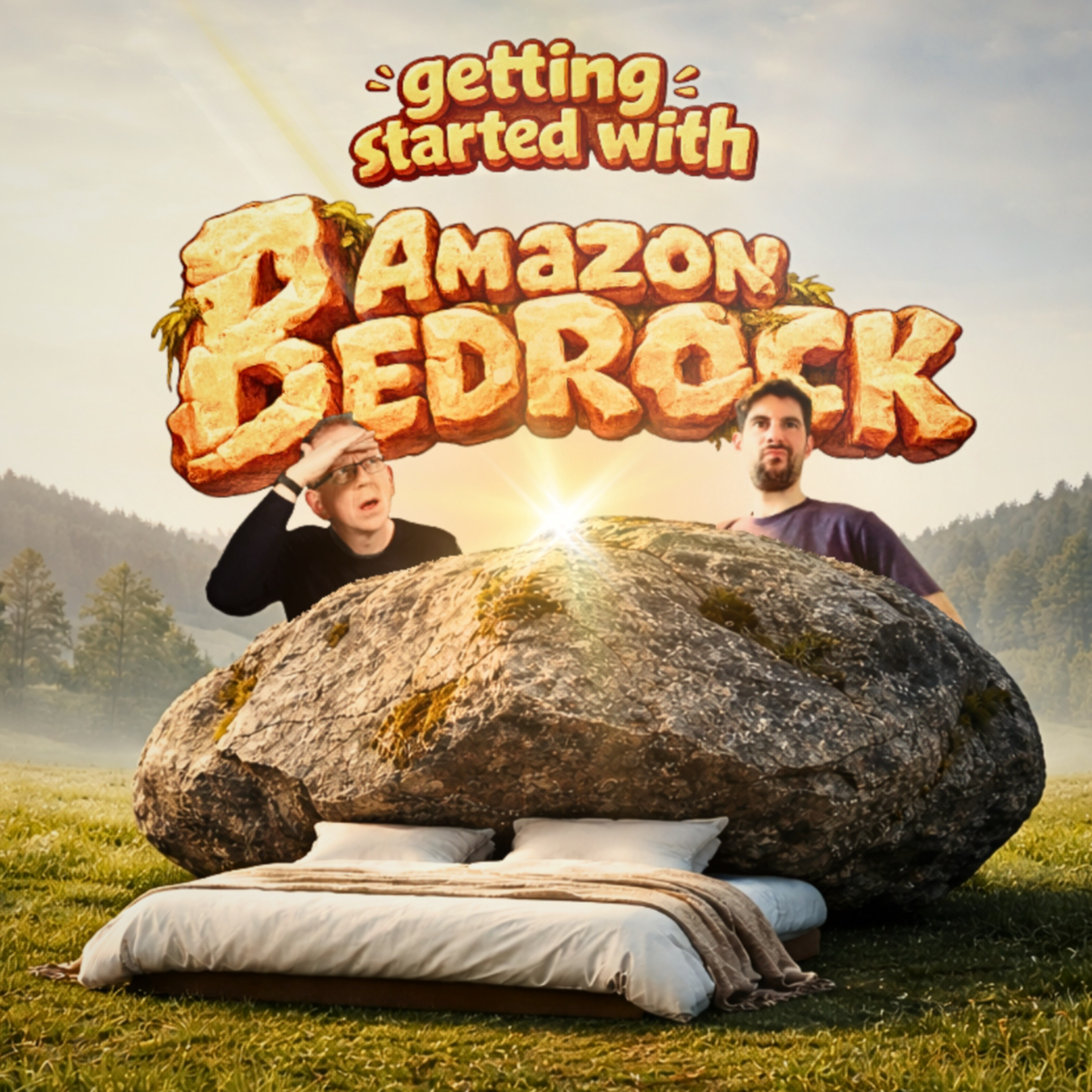
153. LLM Inference with Bedrock
If you’re curious about building with LLMs, but you want to skip the hype and learn what it takes to ship something reliable in production, this episode is for you.We share our real-world experience building AI-powered apps and the gotchas you hit after the demo: tokens and cost, quotas and throttling, IAM and access friction, marketplace subscriptions, and structured outputs that do not break you

152. Exploring Lambda Durable Functions
AWS Lambda is fantastic for small, stateless code on demand. But when your “function” starts looking like a workflow (retries, backoff, long waits, human approvals, callbacks), classic Lambda patterns can feel like a fight: 15-minute max runtime, no built-in state, and orchestration glue everywhere (Step Functions, queues, schedules, and state you did not want to own). In this episode of AWS Bites
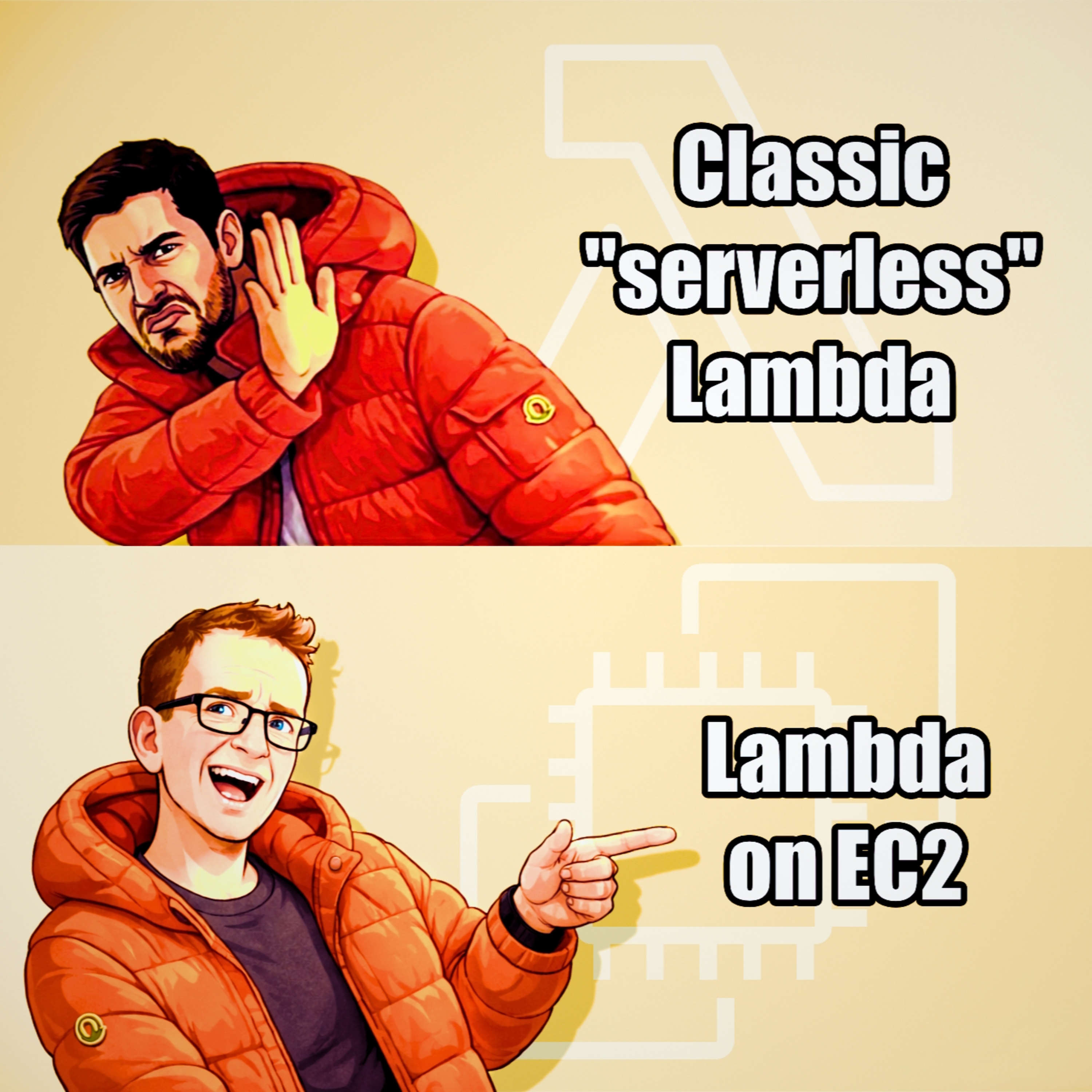
151. EC2 ❤️ Lambda - Lambda Managed Instances
AWS just made Lambda… less serverless. Lambda Managed Instances (Lambda MI) brings managed EC2 capacity into Lambda, and it changes the rules: environments stay warm, a single environment can handle multiple concurrent invocations, and scaling becomes proactive and asynchronous instead of “spin up on demand when traffic hits.”In this episode of AWS Bites, Eoin and Luciano break down what Lambda MI
150. Exploring All-New ECS Managed Instances (MI) Mode
Love AWS Fargate, but occasionally hit the “I need more control” wall (GPUs, storage, network bandwidth, instance sizing)? In this episode of AWS Bites, Eoin and Luciano put the brand-new Amazon ECS Managed Instances (ECS MI) under the microscope as the “middle path” between Fargate simplicity and ECS on EC2 flexibility. We unpack what ECS MI actually is and where it fits in the ECS spectrum, espe
149. Headless CMS on AWS
We dive deep into Strapi, an open-source headless CMS that's changing how we approach content management and CRUD applications. In this episode, we explore how Strapi separates content from presentation, allowing marketing teams to manage content independently while developers maintain full control over the frontend experience. We discuss the powerful features that caught our attention, includ
148. Lambda and Java with Mark Sailes
What if “Java is too old for serverless” is the myth holding your team back in 2025?We put it to the test with Mark Sailes (ex-AWS, Java-on-Lambda expert). In this AWS Bites episode we get specific: when Java is the right call for Lambda and when it isn’t, how to hit real latency targets, and the exact levers that matter in production—SnapStart, provisioned concurrency, smart JVM/GC settings, and

147. Spec coding with Kiro
What if AWS built an IDE to rival your favorite editor? Turns out they did!In this episode of AWS Bites, we dive into Kiro, an AI centric fork of VS Code that tries to turn an empty repo and a loose idea into working software. Kiro imports your VS Code world, then guides you through requirements, design, and a clear task plan before an agent gets to work. We share what clicked, what tripped us up,
146. The AWS Product Lifecycle page
What if AWS had its own version of Killed by Google? Well… turns out it kind of does.In this episode of AWS Bites, we explore the AWS Product Lifecycle page, the official place where AWS quietly lists products and services that are being deprecated, shut down, or closed to new customers. If you rely on AWS in production, this is a page you’ll want to bookmark.We walk through what’s on the list tod

145. We Tried Amazon DSQL So You Don’t Have To (But You Might Want To)
Amazon Aurora DSQL promises to bring a truly serverless experience to SQL databases. But does it actually deliver? In this episode of AWS Bites, we put Aurora DSQL to the test. We explore what makes it exciting, how it compares to traditional Aurora Serverless, and where it falls short. You’ll hear what changed since our last Aurora deep dive, and why DSQL might be the PostgreSQL-compatible server

144. Lambda Billing Changes, Cold Start Costs, and Log Savings: What You Need to Know
Cost is always top of mind when building in the cloud, and recently AWS has introduced some changes worth paying attention to. In this episode of AWS Bites, we explore a shift that caught many by surprise: the “free” INIT phase for Lambda’s managed runtimes is going away. That cold start time that used to fly under the billing radar? It's now part of the cost. We dig into what this means for y

143. Is App Runner better than Fargate?
Picture this. You’ve got a web app built with Rust and Solid.js. It started life running on a dusty on-prem server, but now it's time to move it to the cloud. The clock is ticking. You could take the well-worn AWS path: set up a VPC, configure subnets, attach an ALB, define IAM roles, and deploy with Fargate. Or you could try something different. In this episode of AWS Bites, we share the real

142. Escape from S3
We discuss common use cases and challenges for copying data between S3 buckets and S3-compatible object storage services. We share our experience building an open source Node.js CLI tool called S3-Migrate to efficiently migrate data with separate source and destination credentials. We cover performance considerations like streaming, chunk sizes, concurrency and parallelism.AWS Bites is brought to

141. Step Functions with JSONata and Variables
In this episode, we provide an overview of AWS Step Functions and dive deep into the powerful new JSONata and variables features. We explain how JSONata allows complex JSON transformations without custom Lambda functions, enabling more serverless workflows. The variables feature also helps avoid the previous 256KB state size limit. We share examples from real projects showing how these features si

140. DuckDB Meets AWS: A Match Made in Cloud
In this episode, we explore DuckDB, an open-source analytical database known for its speed and simplicity. Discover how DuckDB stands out in various applications and compare it to other tools like SQLite, Athena, Pandas, and Polars. We also demonstrate integrating DuckDB with AWS Lambda and Step Functions for serverless analytics.AWS Bites is brought to you by fourTheorem. If you are looking for a

139. Building Great APIs with Powertools
In this episode, we discuss using AWS Lambda Powertools for Python to build serverless REST APIs with AWS Lambda. We cover the benefits of using Powertools for routing, validation, OpenAPI support, and more. Powertools provides an excellent framework for building APIs while maintaining Lambda best practices.In this episode, we mentioned the following resources: AWS Bites 41. How can Middy make wri

138. How Do You Become A Cloud Architect?
Ready to take your tech career to the cloud and build those awe-inspiring systems you see? Then you're in the right place. This episode of AWS Bites is your blueprint for becoming a successful cloud architect. We're not just going to talk about it; we'll show you what worked for us, sharing the critical skills you need, and a practical path to build your expertise. Whether you're a beginner or loo

137. Transit Gateway Explained
In this episode, David Lynam provides an overview of AWS Transit Gateway, which aims to simplify complex network connectivity between VPCs, VPNs, and on-premises networks. We discuss the limitations of using VPC peering and the benefits Transit Gateway provides through its hub-and-spoke model. The main components of Transit Gateway are explained, including attachments, route tables, associations,

136. 20 Amazing New AWS Features
In this pre-re:Invent 2024 episode, Luciano and Eoin discuss some of their favorite recent AWS announcements, including improvements to AWS Step Functions, Lambda runtime updates, DynamoDB price reductions, ALB header injection, Cognito enhancements, VPC public access blocking, and more. They share their thoughts on the implications of these new capabilities and look forward to seeing what else is

135. Serverless is making a comeback where you least expect it
In this episode, we discuss the pros and cons of using serverless architecture in enterprise companies. We cover topics like cost, complexity, security, ability to evolve architecture, and more. Overall, we find that serverless can provide benefits like reduced operational costs, improved developer productivity, and increased focus on core business logic for larger companies.
AWS Bites is sponsor

134. Eliminate the IAM User
In this episode, we discuss why IAM users and long-lived credentials are dangerous and should be avoided. We share war stories of compromised credentials and overprivileged access. We then explore solutions like centralizing IAM users, using tools like AWS Vault for temporary credentials, integrating with AWS SSO, and fully eliminating IAM users when possible.
💰 SPONSORS 💰
AWS Bites is brought t

133. Building Businesses in the Cloud with Fiona McKenna
In this special episode of AWS Bites, Eoin is joined by Fiona McKenna,
co-founder and CFO of fourTheorem, to discuss startup advice, hiring and
growing teams, creating an environment for success, and managing cloud
costs. They cover important themes around people, culture, leadership,
and finance from Fiona's extensive experience in the tech industry.
💰 SPONSORS 💰
AWS Bites is sponsored by f

132. GitHub Action Runners on AWS
In this episode, we provided an overview of GitHub Action Runners and discussed the benefits of using self-hosted runners on AWS. We covered options including EC2 and CodeBuild for running GitHub Actions, compared pricing across solutions, and shared our hands-on experience setting things up. Overall, using AWS services can provide more control, lower latency, and cost optimization compared to Git

131. What do you do about CloudFormation Drift?
In this episode, we discuss the concept of CloudFormation drift, what causes it, how to detect it, and strategies for resolving it. We explain that drift happens when the actual state of resources diverges from what is defined in the CloudFormation templates. Common causes include manual changes, third party tools, mixing IaC solutions, and automation. We then cover built-in drift detection in Clo

130. Growing in Tech with Farrah Campbell
In this episode, we had the pleasure to interview Farrah Campbell, head of modern compute community at AWS, prolific speaker, and former AWS Hero. We discussed Farrah's career journey from healthcare into tech, tips on public speaking, dealing with imposter syndrome, the pace of innovation in the cloud, and predictions for the future. Farrah shared personal stories and advice for getting start

129. Lambda Provisioned Concurrency
In this episode, we discuss AWS Lambda provisioned concurrency. We start with a recap of Lambda cold starts and the different concurrency control options. We then explain how provisioned concurrency works to initialize execution environments in advance to avoid cold starts. We cover how to enable it, pricing details, common issues like over/under-provisioning, and alternatives like self-warming fu

128. Writing a book about Rust & Lambda
In this episode, we discuss Luciano's new book project on using Rust to write AWS Lambda functions. We start with a recap on why Rust is a good fit for Lambda, including performance, efficiency, safety, and low cold start times. Luciano provides details on the book's progress so far, the intended audience, and the current published chapters covering Lambda internals, getting started with R

127. Which Load Balancer should you use?
An overview of load balancers, explaining how they distribute traffic across multiple servers and provide high availability. We discuss layer 4 and layer 7 load balancers, detailing their pros and cons. We then focus on AWS load balancers, covering network load balancers and application load balancers in depth, including their features, use cases, and pricing models. We conclude by mentioning some

126. Bastion Containers
This episode discusses solutions for securely accessing private VPC resources for debugging and troubleshooting. We cover traditional approaches like bastion hosts and VPNs and newer solutions using containers and AWS services like Fargate, ECS, and SSM. We explain how to set up a Fargate task with a container image with the necessary tools, enable ECS integration with SSM, and use SSM to start re

125. A first look at CloudFront Hosting Toolkit
In this episode, we discuss the newly announced CloudFront Hosting Toolkit from AWS. We provide an overview of the tool, which aims to simplify deploying modern front-end applications to AWS while retaining infrastructure control. We discuss the current capabilities and limitations and share our hands-on experiences trying out the tool. We also talk about alternatives like Vercel and Amplify, and

124. S3 Performance
In this episode, we discuss some tips and tricks for optimizing performance when working with Amazon S3 at scale. We start by giving an overview of how S3 works, highlighting the distributed nature of the service and how data is stored redundantly across multiple availability zones for durability. We then dive into specific tips like using multipart uploads and downloads, spreading the load across

123. What do you need to know about DynamoDB?
In this episode, we provide a comprehensive overview of DynamoDB, including how it compares to relational databases, when to use it, how to get started, writing and querying data, secondary indexes, and single table design. We share our experiences using DynamoDB and discuss the pros and cons compared to traditional SQL databases.
💰 SPONSORS 💰
AWS Bites is brought to you by fourTheorem. If you n

122. Amazing Databases with Aurora
In this episode, we provide an overview of Amazon Aurora, a relational database solution on AWS. We discuss its unique capabilities like distinct storage architecture for better performance and faster recovery. We cover concepts like Aurora clusters, reader and writer instances, endpoints, and global databases. We also compare the serverless versions V1 and V2, noting that V2 is more enterprise-re

121. 5 Ways to extend CloudFormation
In this episode, we discuss 5 different ways to extend CloudFormation capabilities beyond what it natively supports. We started with a quick recap of what CloudFormation is and why we might need to extend it. We then covered using custom scripts and templating engines, which can be effective but require extra maintenance. We recommended relying instead on tools like Serverless Framework, SAM, and

120. Lambda Best Practices
In this episode, we discuss best practices for working with AWS Lambda. We cover how Lambda functions work under the hood, including cold starts and warm starts. We then explore different invocation types - synchronous, asynchronous, and event-based. For each, we share tips on performance, cost optimization, and monitoring. Other topics include function structure, logging, instrumentation, and sec

119. The state of AWS 2024 (AnsWeRS community survey commentary)
In this episode, we provide commentary and analysis on the 2024 AWS Community Survey results. We go through the key findings for each area including infrastructure as code, CI/CD, serverless, containers, NoSQL databases, event services, and AI/ML. While recognizing potential biases, we aim to extract insights from the data and share our perspectives based on experience. Overall, we see increased a

118. The landing zone: Managing multiple AWS accounts
In this episode, we provide an introductory overview of AWS's best practices for managing infrastructure using multiple accounts under an organization. We discuss the advantages of this approach and how to get started creating your own multi-account environment, or "landing zone".
💰 SPONSORS 💰
AWS Bites is brought to you by fourTheorem, an AWS Partner that does CLOUD stuff well, in

117. What do EBS and a jellyfish have in common?
In this episode, we provide an overview of Amazon EBS, which stands for Elastic Block Storage. We explain what block storage is and how EBS provides highly available and high-performance storage volumes that can be attached to EC2 instances. We discuss the various EBS volume types, including GP3, GP2, provisioned IOPS, and HDD volumes, and explain how they differ in performance characteristics lik

116. What is RAM (Resource Access Manager)?
In this episode, we discuss AWS Resource Access Manager (RAM) and how it can be used to securely share AWS resources like VPC subnets, databases, and SSM parameters across accounts. We explain the benefits of using RAM over other options like resource policies and assumed roles. Some key topics covered include how to get started with RAM, how it works from the resource owner and resource participa

115. What can you do with Permissions Boundaries?
In this episode, we discuss Permission Boundary policies in AWS IAM. A permissions boundary is an advanced feature in which you set the maximum permissions that an identity-based policy can grant to an IAM entity. When you set a permissions boundary for an entity, the entity can perform only the actions allowed by its identity-based policies and its permissions boundaries.
In this episode, we disc

114. What's up with LLRT, AWS' new Lambda Runtime?
In this episode, we discuss the new experimental AWS Lambda LLRT Low Latency runtime for JavaScript. We provide an overview of what a Lambda runtime is and how LLRT aims to optimize cold starts and performance compared to existing runtimes like Node.js. We outline the benefits of LLRT but also highlight concerns around its experimental status, lack of parity with Node.js, and reliance on dependenc

113. How do you revoke leaked credentials?
In this episode, we discuss what to do if you accidentally leak your AWS credentials during a live stream. We explain the difference between temporary credentials and long-lived credentials, and how to revoke each type. For temporary credentials, we recommend using the AWS console to revoke sessions or creating an IAM policy to deny access. For long-lived credentials, you must deactivate and rotat

112. What is a Service Control Policy (SCP)?
In this episode, we provide a friendly introduction to Service Control Policies (SCPs) in AWS Organizations. We explain what SCPs are, how they work, common use cases, and tips for troubleshooting access-denied errors related to SCPs. We cover how SCPs differ from identity-based and resource-based policies, and how SCPs can be used to set boundaries on maximum permissions in AWS accounts across an

111. How we run a Cloud Consulting business
In this episode, we discuss how we work as a cloud consulting company, including our principles, engagement process, sprint methodology, and focus on agile development to deliver successful projects. We aim to be trusted partners, not just vendors, and enable our customers' business goals.
By the end of this episode, you will know what working with a cloud consulting company like fourTheorem

110. Why should you use Lambda for Machine Learning?
In this episode, we discuss using AWS Lambda for machine learning inference. We cover the tradeoffs between GPUs and CPUs for ML, tools like ggml and llama.cpp for running models on CPUs, and share examples where we've experimented with Lambda for ML like podcast transcription, medical imaging, and natural language processing. While Lambda ML is still quite experimental, it can be a viable opt

109. What is the AWS Project Development Kit (PDK)?
This episode of the AWS Bites Podcast provides an overview of the AWS Project Development Kit (PDK), an open-source tool to help bootstrap and maintain cloud projects. We discuss what PDK is, how it can help generate boilerplate code and infrastructure, keep configuration consistent across projects, and some pros and cons of using a tool like this versus doing it manually.
Is PDK something you sh

108. How to Solve Lambda Python Cold Starts
In this episode, we discuss how you can use Python for data science workloads on AWS Lambda. We cover the pros and cons of using Lambda for these workloads compared to other AWS services. We benchmark cold start times and performance for different Lambda deployment options like zip packages, layers, and container images. The results show container images can provide faster cold starts than zip pac

107. Expert opinions from re:Invent 2023
In this episode, we share expert opinions from AWS community leaders on their favorite announcements from re:Invent 2023, advice for those starting their cloud journey, predictions for the future of serverless, whether to go multi-cloud or not, and how AI will impact developers. Our guests provide insightful perspectives on getting hands-on experience, leveraging the AWS community, thinking throug

106. Luciano at re:Invent
Luciano and Eoin chat about Luciano's experience attending AWS re:Invent 2023 in Las Vegas for the first time. They talk about the massive scale of the event, logistical challenges getting around between venues, highlights from the keynotes and announcements, and tips for networking and getting the most out of re:Invent. Luciano shares his perspective on the AI focus, meeting people in real li

105. Integration Testing on AWS
In this episode, we discuss integration testing event-driven systems and explore AWS's new Integration Application Test Kit (IATK). We cover the challenges of testing events and common approaches like logging, end-to-end testing, and using temporary queues. We then introduce IATK, walk through how to use it for EventBridge testing, and share our experience trying out the X-Ray trace validation

104. Explaining Lambda Runtimes
In this episode, we celebrate AWS Lambda's 9th birthday by taking a deep dive into Lambda runtimes. We discuss how Lambda works, compare official runtimes vs. custom runtimes, and explain when and why building a custom runtime might be worth the effort. We talk through how custom runtimes work, options for deploying them, and potential use cases where they could be beneficial over standard run

103. Building GetAI Features with Bedrock
In this episode, we discuss how we automated generating YouTube descriptions, chapters and tags for our podcast using Amazon's new GenAI tool: Bedrock.
We provide an overview of Bedrock's features and how we built an integration to summarize podcast transcripts and extract relevant metadata using the Anthropic Claude model. We share the prompt engineering required to instruct the AI, and

102. Getting Ampt with Jeremy Daly
In this episode, we have the pleasure of speaking with Jeremy Daly, CEO of Ampt and a leader in the AWS and serverless community. We discuss Jeremy's journey into AWS and serverless, the prolific open source work and content he creates, the evolution of serverless over the years, common myths about serverless, and, finally, the story behind building Ampt to improve the developer experience. Je

101. Package and Distribute Lambda Functions for fun and profit
Today we embark on a fascinating journey into the world of AWS Lambda functions and how to make them accessible to the public. In a recent use case, involving the creation of a public Lambda function for AWS users, we asked ourselves some interesting questions. How can you securely, cost-effectively, and conveniently publish AWS resources, especially Lambda functions, for others to use? And... can

100. Exploring Ampt, a new way to build cloud apps on AWS
Greetings, my fellow innovators, and welcome to this illuminating episode of AWS Bites! In this edition, we embark on a journey into the realms of Ampt, a groundbreaking solution that simplifies the intricate landscape of AWS application development, allowing you to direct your focus toward the very essence of your applications, unhindered by the burdens of infrastructure management.
As your guid

99. The fears of adopting AWS (and how to fight them)
In this thrilling episode of AWS Bites Podcast, we delve into the murky world of cloud computing and discuss the most haunting fears that deter businesses from adopting Amazon Web Services (AWS). In this gritty discussion reminiscent of a noir novel, they reveal the sinister concerns of cost, complexity, security, and vendor lock-in that keep organizations in the dark.
If you're in the cloud

98. Is AWS Going to Kill Pinpoint?
Today, we will explore the enigmatic world of Amazon Pinpoint. Pinpoint boasts a wide range of capabilities that can prove advantageous for various marketing endeavors.
In this intriguing episode, we will shed light on Pinpoint's core features and use cases. Additionally, we will compare it to several other marketing products, including Google Analytics, Marketo, Mailchimp, and more.
However

97. Configuration for AWS Applications (Env vars, SSM, Secrets Manager, AppConfig)
Rev up your AWS know-how in this high-octane episode of AWS Bites Podcast, where we take you under the hood to fine-tune your AWS applications configuration!
Kicking things off, we rev our engines and stress the vital role of slick configuration management in the world of cloud-based applications, leaving those old-school methods in the dust. Buckle up as we steer you through the twists and turns

96. AWS Governance and Landing Zone with Control Tower, Org Formation, and Terraform
In this episode of AWS Bites, Luciano and Eoin dive deep into the world of AWS governance, landing zones, and automation tools. AWS emphasizes the importance of good governance for customers of all sizes, whether you're starting from scratch or have been using AWS for years. But with so many tools available, which one should you choose?
Join us as we explore the best practices for setting up

95. Mounting S3 as a Filesystem
Saddle up for a cloud adventure like no other in this episode of AWS Bites, where Eoin and Luciano explore the untamed world of AWS S3 Mountpoint.
Just like a trusty steed on the digital prairie, Mountpoint gallops into action to solve complex use cases, making it a valuable asset for managing massive data, achieving high throughput, and effortlessly fetching information from the AWS S3 wilderness

94. Get the Most out of CloudTrail with Athena
Ever wondered how to gain deep insights into the myriad of activities within your AWS organization accounts? In this episode of AWS Bites, we dive into the world of AWS CloudTrail and Athena, showing you how to seamlessly query and analyze CloudTrail logs for valuable information, troubleshooting, security, and compliance.
💰 SPONSORS 💰
fourTheorem is the company that makes AWS Bites possible. If

93. CDK Patterns - The Good, The Bad and The Ugly
In today's episode, we're diving into the fascinating world of CDK Patterns - those ingenious building blocks that can transform your cloud journey. We uncover what CDK Patterns are, where to find them, and why you'll want to use them!
With CDK's object-oriented abstraction, L2 and L3 Constructs bring a whole new level of convenience. We'll explore where to find these powerful

92. Decomposing the Monolith Lambda
In this episode of AWS Bites, we take you on a captivating migration journey. Together, we'll explore how we transformed fullstackbulletin.com's automation process, leaving behind the complexities of a monolithic AWS Lambda and embracing the efficiency of Step Functions.
Join us as we dive into the challenges of automating a weekly newsletter, trying to strike the perfect balance between a

91. Our Journeys into Software and AWS
In this episode, we take a journey through time and technology and learn the origin stories of Eoin and Luciano. In this captivating discussion, they share their paths into the world of software development and their eventual immersion into the realm of Amazon Web Services (AWS).
Eoin's story begins in the early days of home computing, where he tinkered with a Spectrum ZX, coding programs and

90. 9 Ideas that would Skyrocket AWS to New Heights
AWS is great, but it can surely be better, much better! Today we want to mention 9 things that could help AWS to reach new heights: hard billing limits, better UX and documentation, and much more! We also have a special message to AWS and all the AWS professionals who have helped throughout the years.
Join us in this intergalactic journey to improve the leading cloud provider!
💰 SPONSORS 💰
fo

89. Should you simulate AWS locally?
Welcome to the epic tale of AWS Bites! In this chapter, we embark on a perilous journey through the challenges of developing distributed applications on AWS.
We encounter fierce foes in the form of deployment times and limited access to real AWS services during local development.
But fear not, for we have powerful tools at our disposal, including the legendary LocalStack and Serverless offline.

88. What is VPC Lattice?
In this episode of AWS Bites, we discuss VPC Lattice, a new service in the Salad Bowl of AWS Networking. We cover all the concepts, applications, and exciting possibilities for VPC Lattice and share tips on how to use it effectively.
We talk about reducing friction between network admin and dev teams and how VPC Lattice can be a game changer for traditional and serverless workloads.
Get ready fo

87. Interviewing for AWS Roles
Are you interested in landing an AWS role? Or maybe are you looking to hire some cloud talent?!
In this episode of the AWS Bites podcast, we share our insights on the interview process we have adopted at fourTheorem.
This process is not just about testing AWS knowledge, but it's also about evaluating cultural fit, way of working skills and knowledge, and future plans.
From the “Fiona chat”

86. How do you integrate AWS with other clouds?
Are you struggling with securely integrating workloads running on-premises, in Azure, or in any other cloud with a workload running in AWS?
In this exciting episode of the AWS Bites podcast, we dive into 6 different options for securely and efficiently integrating workloads between clouds. From providing a public API in AWS with an authorization method to using IAM roles anywhere to using OIDC f

85. Tip for Attending AWS Events
In the latest episode of AWS Bites Podcast, Luciano and Eoin share their insider tips on how to get the most out of in-person AWS events like summits, re:Inforce, or re:Invent.
From networking to swag hoarding, they cover everything you need to know to make the most of these conferences. Learn how to convince your employer to let you attend and how to plan ahead to get the most out of the event. P

84. Are VPCs an anti-pattern?
In this episode of AWS Bites, we explore the future of Virtual Private Clouds (VPCs) in the context of the zero-trust security trend.
We'll dive into the pros and cons of using VPCs, including their usefulness when dealing with sensitive data or when you need fine-grained control over your network environment. But let's be real, sometimes VPCs can be a bit of a headache. We'll discuss
88. What is VPC Lattice?
VPC Lettuce is a new service form AWS that lets you pay per leaf instead of buying a whole lettuce up front. Pricing starts at $0.50 per gram per second.

83. Bucket List of S3 Best Practices
In this episode of the AWS Bites podcast, we explore the best practices for creating and configuring S3 Buckets, Amazon Web Services' popular object storage service. We will learn how to set up buckets correctly from the start, avoiding common pitfalls and ensuring efficient management.
We provide a quick recap of Amazon S3, covering buckets, objects, and various use cases. Discover the import

82. Redis on AWS: Is ElastiCache the Right Choice?
Who is the king of all databases when it comes to performance? Yes, Redis! Of course!
In this episode of AWS Bites, we talk about Redis on ElastiCache, one of the most essential instruments in the cloud architect's toolbox.
We explore the joys and woes of Redis on AWS and share some exciting alternatives regarding in-memory databases and caching systems.
We discuss the use cases of Redis, incl

81. Remote VSCode with EC2 and Cloud9
Are you tired of being stuck in your local development environment? Do you dream of coding from a beach in Sicily? Well, get ready to make those dreams a reality with this episode of AWS Bites!
Today we are here to show you how to use VSCode to develop against a remote Cloud9 instance on AWS.
You'll learn how to edit in VSCode instead of using the Cloud9 editor, so you can take advantage of th

80. Can you do private static websites on AWS?
In this episode of the AWS Bites podcast, we discuss the challenges of hosting private static websites on AWS.
We explore why it's important to host internal corporate applications and line of business applications only for internal consumption, and the requirements for doing so.
We also evaluate different options for hosting private static websites, including S3 with CloudFront, containers

79. How do you do Functionless APIs?
In this exciting episode of the AWS Bites podcast, we're diving into the fascinating world of functionless applications. Yes, you heard it right! We'll be exploring how reducing the number of lambda functions can simplify your applications, resulting in lower latency, no cold starts, and cheaper costs.
But don't worry, we still love lambda! We'll be explaining the pros and cons of

78. When do you need a bastion host?
Harken, good sir! Art thou aware of the arcane art of safeguarding thy AWS instances from malevolent threats whilst keeping them accessible for thy travels? There exists a mighty tool for such purpose, and it is hight the "bastion host."
In this pamphlet, we shalt unravel the mysteries of the bastion host and showeth thee how to useth it to safeguard thy web space. We shall commence by

77. How do you use Lambda Response Streaming?
Are you tired of waiting for your Lambda functions to finish before getting a response? Well, now you don't have to! In this episode of the AWS Bites podcast, we will talk about Lambda Response Streaming, a new feature recently added by AWS that lets you stream responses from your Lambda functions in real time.
We'll start by explaining what Lambda Response Streaming is and how it differs

76. Unboxing AWS Copilot
In this episode, we're doing something different! Join us for a special screen-sharing edition of our podcast series, as we take a deep dive into AWS Copilot, a service designed to simplify container application deployment on AWS.
During this video, we'll be sharing our screens as we walk through the AWS Copilot landing page and documentation, and demonstrate how to use the service to dep
Recommended
For The Love of Paul McGrath: An Aston Villa Podcast

Bryan Kearney
MoneyNeverSleeps

Life of Frances Power Cobbe as Told by Herself

Health360: Lessons Lives And Learned

The Shade Gardening Podcast

The Count Back
The EY Podcast

Bitesize Irish Podcast

Digital Law Perspectives

Talking Technology with V I Labs

Any Given Runday
